"We're going to allow you to build bigger on your lot than if you tore down," Trustee Alexis Braden told The Hinsdalean this spring. Braden is president of the Hinsdale Historical Society and a former historic preservation commissioner, and she added that the offer "can be appealing."
That sentence is the most useful thing a buyer can know about older homes in Hinsdale. The Village has limited legal power to stop a teardown. What it can do is change the math on a specific house. If you're comparing a 1910s house with a lot priced for new construction, the details of that math belong in your offer.
The vote that didn't stop the bulldozer
The clearest example is 142 E. First Street, the 1869 William Whitney House in the Robbins Park Historic District. In August 2025, the Historic Preservation Commission denied a Certificate of Appropriateness to demolish the house and build a new one. Its reasons were the home's history and concerns about whether the new design fit the district.
The application then went to the Village Board. On September 16, 2025, a motion to approve the certificate failed with no ayes and six nays. Many people read that as the end of it. However, the Village's own Board packet states the rule plainly. The Board's final decision "is advisory and shall not prohibit an applicant from proceeding with the proposed course of action upon receiving all other required approvals and permits."
About two weeks after the vote, The Hinsdalean reported that demolition crews were scheduled to take the house down that week. The Village's records show the property was added to its Historically Significant Structures Property List in 2023 and dropped automatically when it was demolished.
That's how Hinsdale's protection works for most homes in a historic district. Review is required, but the outcome is advisory for properties that aren't local landmarks, and the Board's vote is the last step before other permits. Even a unanimous vote can't block a teardown, so the Village has put its effort into making preservation the better deal.
Where the leverage actually sits
The Village set up a Historic Overlay District in 2022. Owners of homes on the Historically Significant Structures Property List can use a set of voluntary incentives. The one that changes what a lot is worth is alternative bulk zoning. In the R-1 through R-4 single-family districts, a listed home that adds on can get zoning terms that, in the Village's words, an owner "otherwise would not be able to take advantage of if pursuing demolition and new construction."
| Rule | New construction after a teardown | Listed historic home adding on |
|---|---|---|
| Floor area ratio | Standard limit applies | Can be waived |
| Building height | Standard limit applies | Can be waived |
| Setbacks | Standard | Can be reduced |
| Maximum lot coverage | 50% | 60% |
| Path to approval | Standard zoning; any relief goes through the full variation process | Expedited process in place of the full Zoning Board of Appeals variation |
Put two neighboring lots of the same size next to each other. A builder who clears one is held to the standard floor area and coverage limits. An owner who keeps the old house next door and adds on can potentially build past those limits. On a listed property, the existing house is what qualifies the lot for the extra square footage.
Money comes with it too. The Village can match 50% of eligible project costs, up to $10,000 per project, on an applicant investment of $20,000. Smaller projects qualify proportionally. After at least $50,000 in eligible exterior work, owners can get the Village's share of their property tax bill back for up to five years. The Village's example shows a $2,500 annual Village share adding up to about $12,500. Fee waivers and expedited permit processing round out the list.
What the trade has cost, and what it has produced
The program reaches more homes than its reputation suggests. According to The Hinsdalean's May 2026 report, 102 homes were added to the list in the three years and two months after the first group of 47 was approved in March 2023. Three have been removed after demolition: 505 S. County Line Road, 114 S. Stough Street and 142 E. First Street.
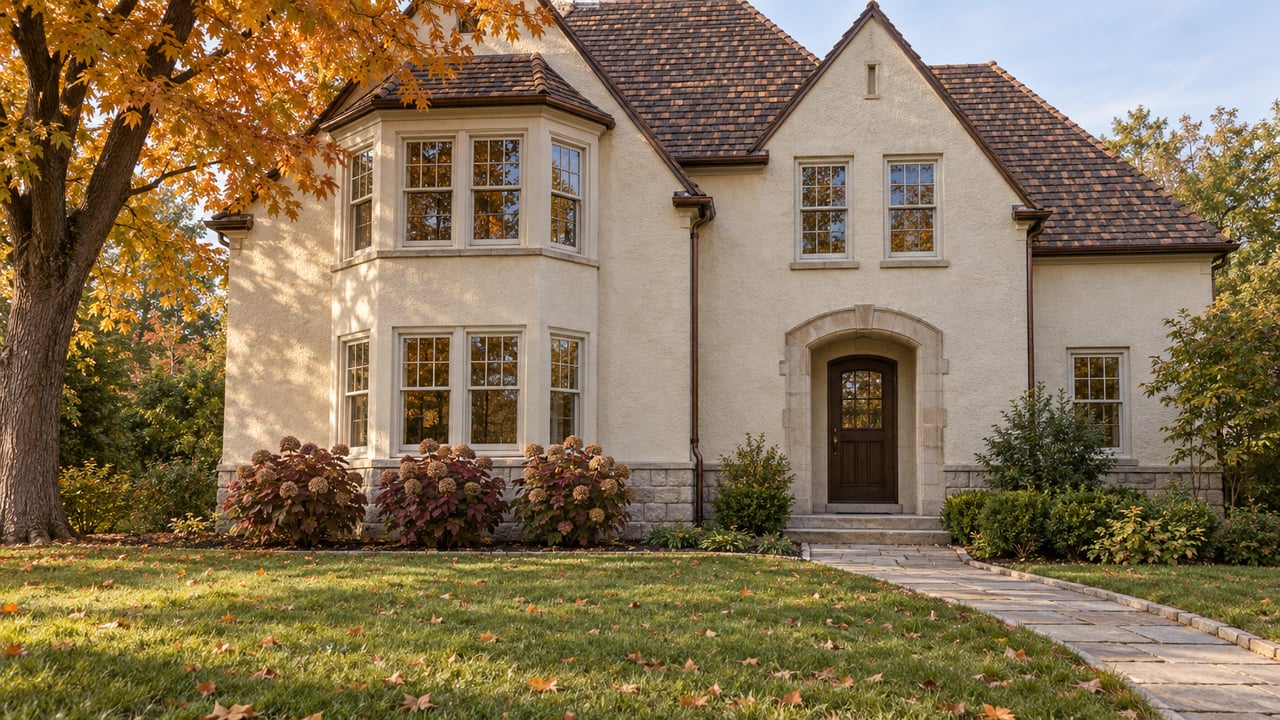
The list covers a wide range of houses. Village planner Bethany Salmon described "small brick bungalows on small lots" next to "very stately Queen Anne mansions in the Robbins Park Historic District." Approved projects range from additions to replacing a leaky 100-year-old slate roof at 518 S. Garfield Avenue.
The same report puts the Village's commitment at nearly $246,000 in fee waivers, $160,000 in grants and $137,000 in property tax rebates over the next five years. More than $12 million in construction has been tied to the program. That's roughly half a million dollars in public money against about $12 million of private reinvestment in existing homes. The Village gets that return only because the zoning relief makes keeping a house competitive with replacing it.
What a buyer actually inherits
This is where it becomes a transaction issue. Once a property is on the list, a notice is recorded on the title so future owners know about the incentives. A title search on an older Hinsdale home can therefore turn up something the listing sheet may not mention.
Several pieces carry over or come attached:
- Tax rebate benefits. The Village says these "may be transferred to subsequent property owners."
- Project obligations. Owners who use an incentive sign a Preservation Incentive Agreement. They must maintain the approved exterior improvements for five years, and the Village can terminate agreements for noncompliance and seek repayment of incentive funds.
- Design review. Work done with incentives is reviewed against the Secretary of the Interior's Standards for the Treatment of Historic Properties.
The public materials don't say whether an approved grant or a pending application moves to a new owner along with the rebate. If you're buying a house where a project is underway, ask that question directly. This post is general information about how the program works, not legal, tax or financial advice. Confirm how it applies to a specific property with the Village, your attorney and your tax professional.
Why the timing matters for sellers
Salmon gave the program's most practical advice to The Hinsdalean: "contact the village as early as possible." She added, "A lot of these homes got on the list when they were actually being marketed for sale."
For a seller, that changes what the listing offers. An older house with no list status is marketed to buyers who would renovate within the standard limits. The same house with list status can be marketed with expansion rights a new build next door doesn't have. The steps take months, so they need to fit the listing calendar:
- Getting on the list. Either the owner or the Village can start the process. It includes notice, a public hearing before the Historic Preservation Commission and a final vote by the Village Board. Salmon put the typical wait at about three months.
- Filing for an incentive. Complete applications are due at least 28 days before a regular commission meeting.
- Waiting on review. The Village estimates one to two months for fee waivers and alternative bulk zoning, and three to four months for grants and tax rebates.
Commission meetings get canceled, too. The October 7 meeting was canceled, according to the Village's commission calendar, even though a draft agenda reported by The Hinsdalean had included a Round 13 hearing on list additions and an incentive application for 408 S. Washington. Neither had been resolved as of October 12, 2026.
The teardown cycle is still running in 2026
The incentives compete with an active new-construction market. The Village's monthly building permit reports for January through September 2026 show 14 new single-family home applications. Nine of them explicitly pair demolition with new construction. Builders named in those logs include HomeCrafters at 121 N. Adams, C Bart Homes at 218 W. Hinsdale, GP Patrick Homes at 554 N. Lincoln and Timber Trails Building at 526 Woodside.
The district review doesn't reliably stop demolitions. At its April 1 meeting, the commission voted 5–0, The Hinsdalean reported two weeks later, to approve demolition of a circa-1910 contributing home at 305 S. Garfield and a modern replacement. The chair raised concerns about losing the district's character, and the commission asked for more brickwork on the north side. A demolition and new single-family permit was issued for the address on May 19, 2026.
The incentive path stays busy as well. On September 1, 2026, the Village Board voted 6–0 to approve a preservation incentive certificate and agreement for 311 Forest Road. Both kinds of projects are going on at once, and which one happens to a particular older house usually depends on which offers the better numbers to whoever owns it.
A few questions that come up
Does National Register status stop a demolition? No. As the Hinsdale Journal explained in its piece on the 1889 Peabody House at 8 E. Third Street, a National Register listing in Illinois is honorary and doesn't prevent demolition by itself. That house has an added layer, a Landmarks Illinois preservation easement on specific features including the west and north facades, the porches and the main staircase.
Which homes are eligible for the list? A home has to be in the Village's Historic Overlay District and meet just one of six criteria. Many of the criteria involve distinctive architecture or a connection to a significant person or event in Hinsdale's history, according to The Hinsdalean.
Do I have to use the incentives if my home is listed? No. Applying for or using any incentive is voluntary.
If you own an older Hinsdale home and are thinking about selling, or you're looking at one with plans to expand, list status and timing should be part of the plan from the first conversation. Jessica Halkias can help you find out where a property stands with the Village, what its expansion rights could mean for presentation and price, and how to schedule a listing around the commission calendar. Schedule a complimentary home consultation.